
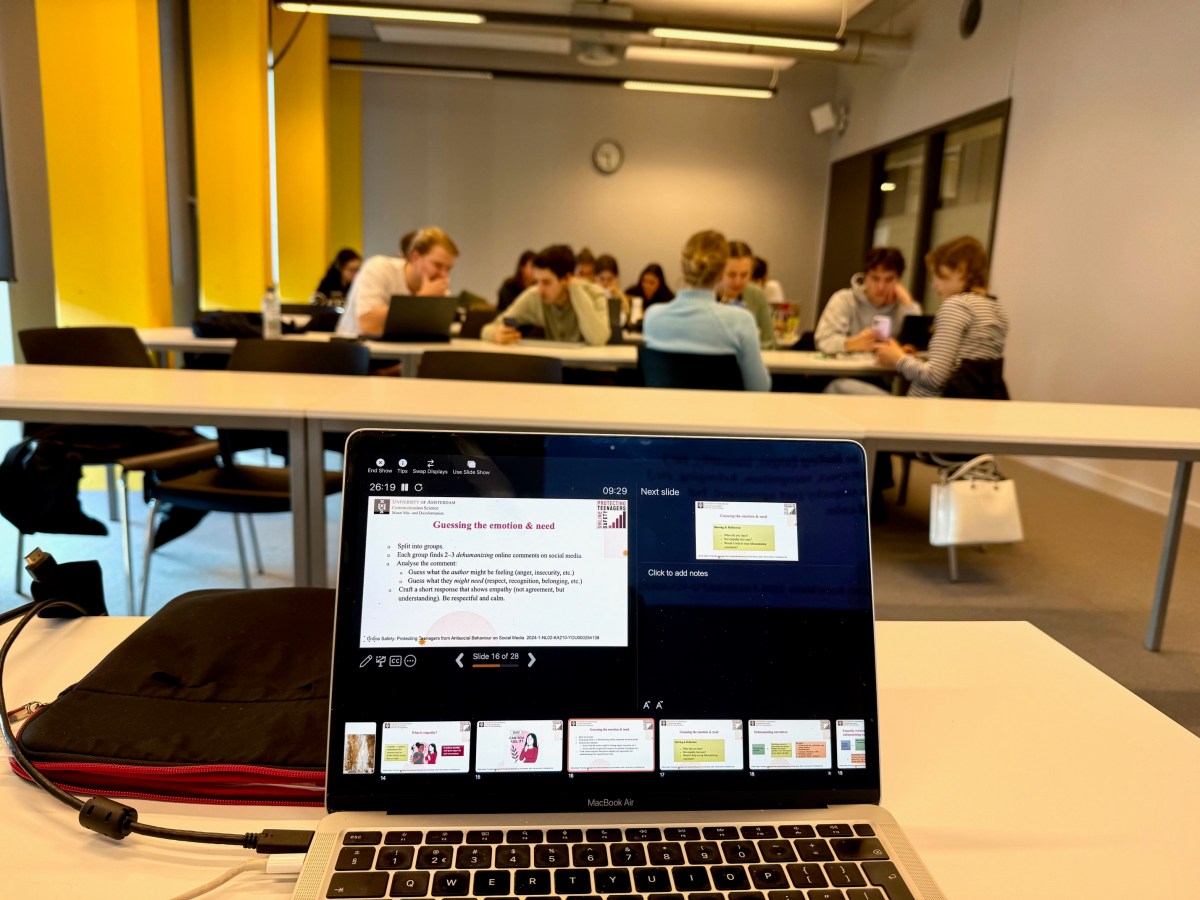
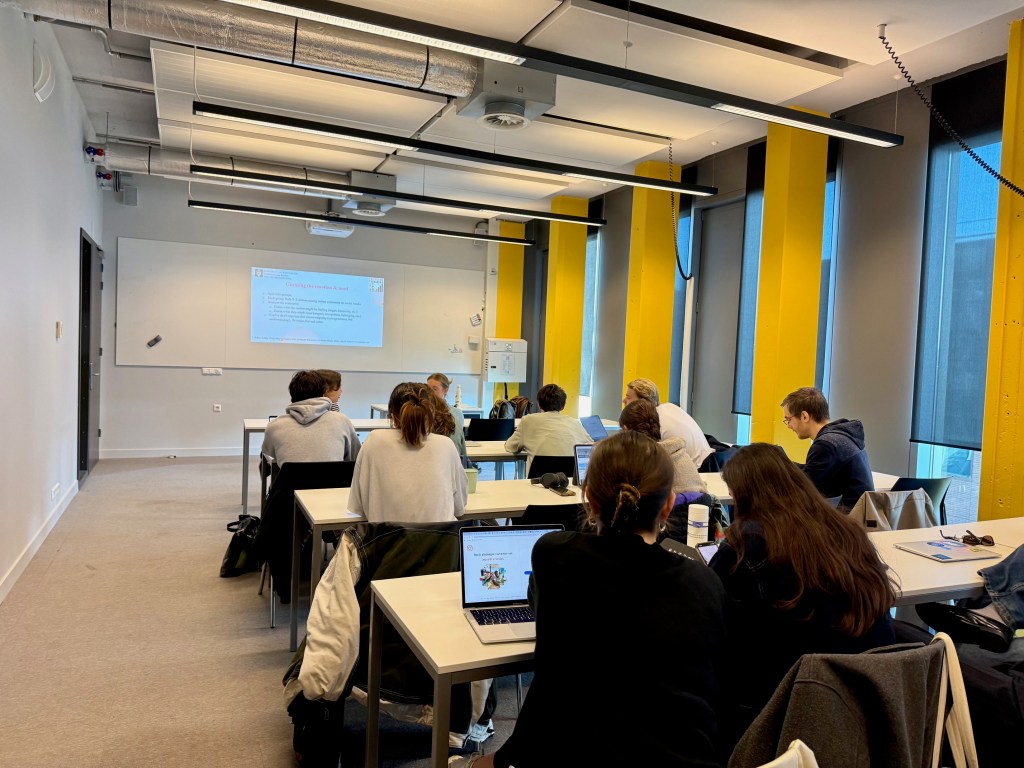
On March 5, project partners conducted the workshop “Empathy against Misinformation” for students of the Communication Science program at the University of Amsterdam.
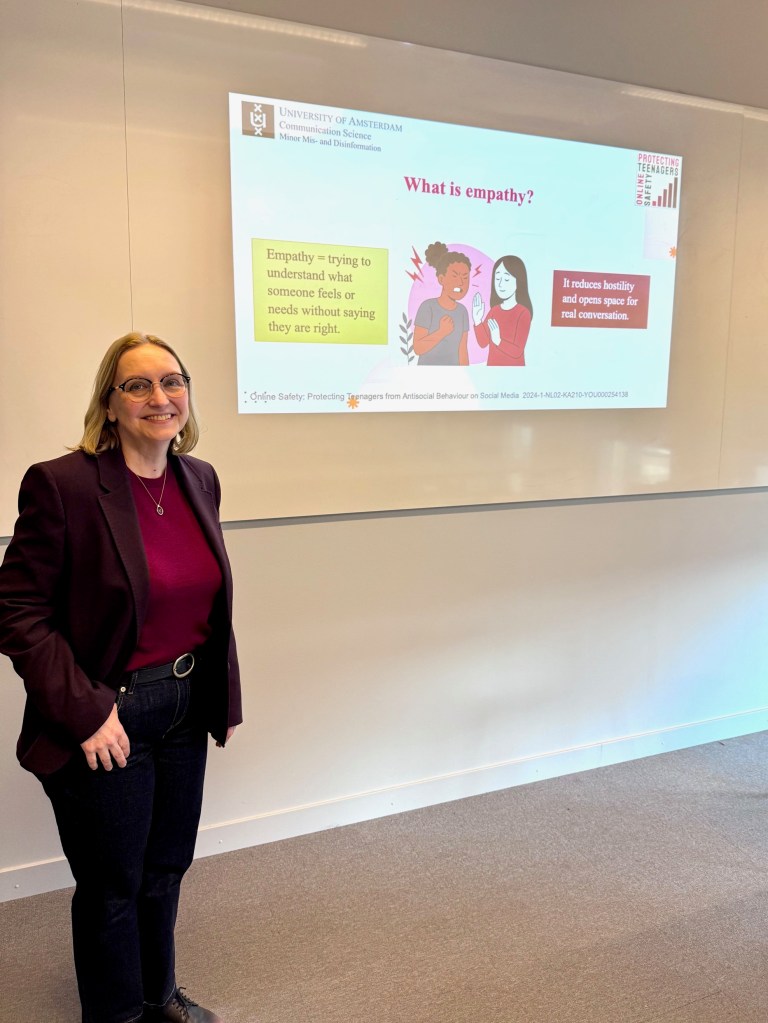
Last year, during workshops with teenagers in the Netherlands and Sweden, we noticed that participants enjoyed using empathy as a communication tool when responding to aggressive social media comments. Social media users rarely respond to hostility with empathy and understanding, which makes such responses unexpected and disarming.
But can this approach also work when responding to misinformation about marginalized groups such as migrants, ethnic or religious minorities, or people with mental health challenges? Online narratives about these groups are often dehumanizing – denying them dignity and comparing them to animals or diseases. Such narratives are dangerous because dehumanization makes violence against these groups easier to justify and can contribute to social conflict.
So how can we challenge these narratives? Can empathy be used when responding to people who spread them?
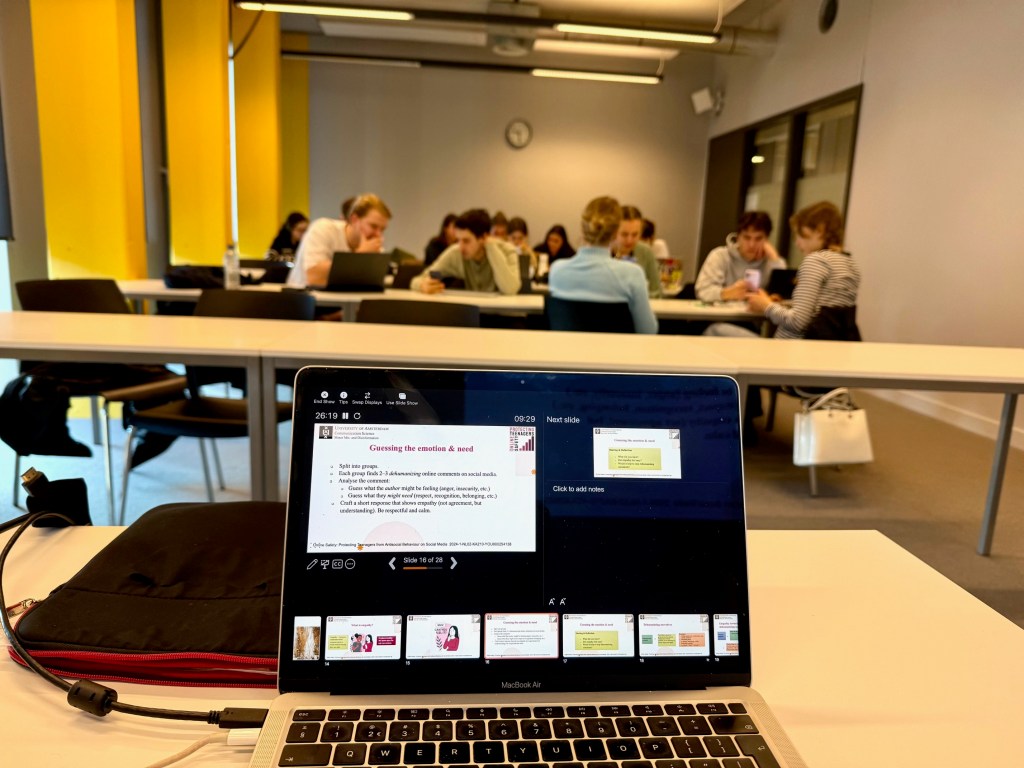
This is not easy. It is difficult to feel connected to someone who calls others “pigs” or “cockroaches” or even calls for their “extermination.” However, in this context empathy is not a feeling – it is a communication tool. By identifying the emotion behind a comment (such as fear or anger) and acknowledging the underlying human need (for safety, respect, or belonging), it becomes possible to create a point of connection. Once this connection is established, we can remind the person that fundamental human values should not be violated: people are human beings, not animals.
Did it work? To some extent. Students were able to identify emotions behind dehumanizing comments quite easily. Identifying the needs behind those emotions was more challenging, but they often came down to basic human needs: safety, respect, belonging, understanding the world, and preserving social order. From there, the next step is to challenge the behavior by pointing out that denying others dignity and humanity is not a solution. Everyone has the right to feel safe, respected, and part of their community, including migrants and people with different religious identities.
Empathy can be a powerful tool to counter dehumanizing narratives and reduce hostility online. We plan to continue testing this approach in different contexts.
 Online Safety